
Quick Answer: When Should You Improve Organic Visibility or Pay for Placement?
Improve organic visibility when shoppers struggle to discover or understand the listing. Buy placement when an eligible product can convert and you have a specific audience, budget and outcome to test.
| Situation | First move |
|---|---|
| The exact variant is hard to find or identify | Fix listing content and check availability |
| The listing is ready but reaches few new category shoppers | Test a limited paid campaign |
| Ads claim sales but total orders barely move | Compare overall orders and contribution |
Compare results within the same marketplace, product group and selling window.
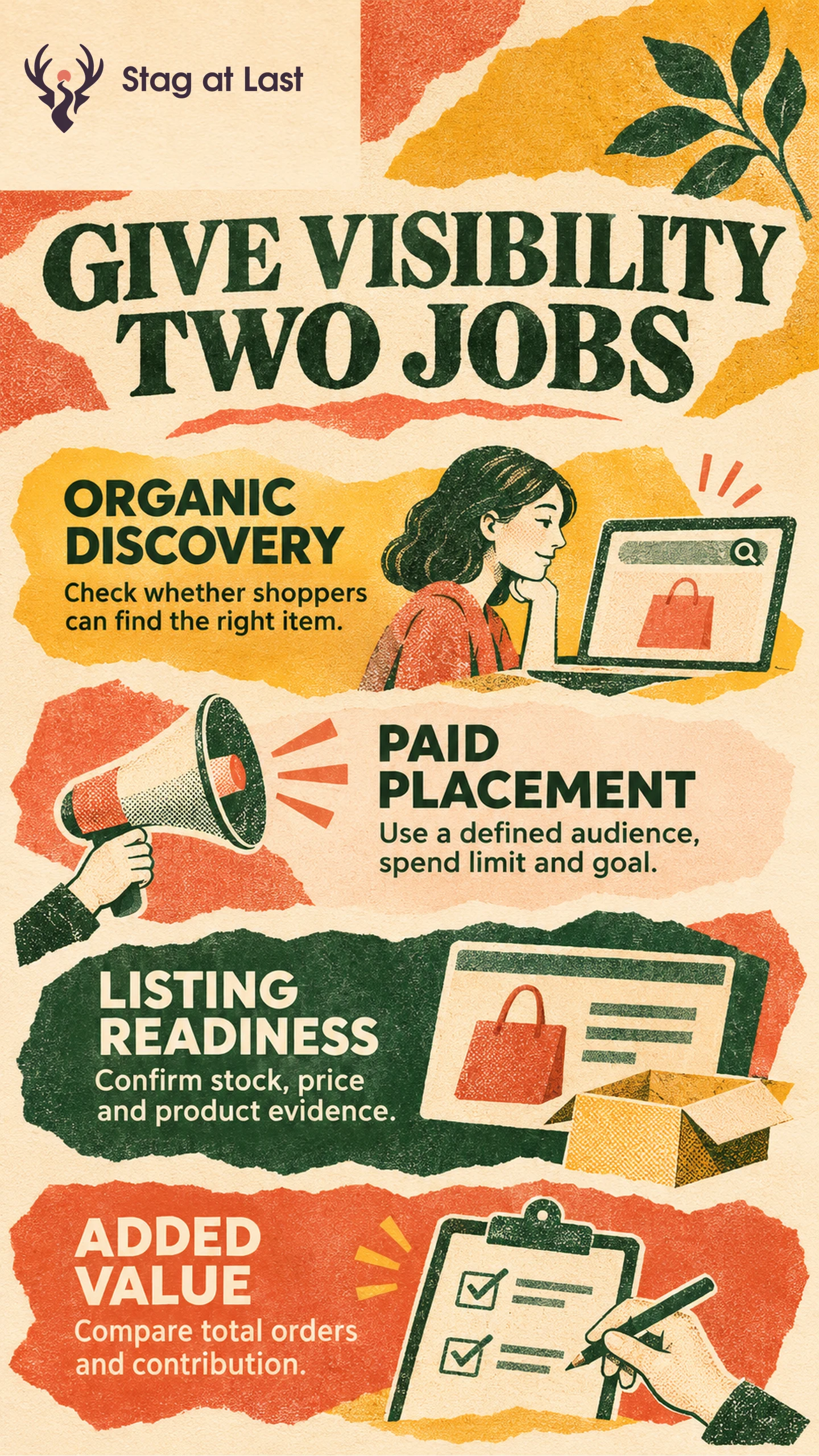
A marketplace seller can appear twice for the same search: once in an unpaid result and once in a sponsored placement. Those appearances answer different questions. Find out whether customers can discover the item through the listing itself, then decide whether paying for a particular placement reaches shoppers the business would otherwise miss.
Give Organic and Paid Visibility Different Jobs
Organic visibility is exposure through unpaid marketplace surfaces, such as a search result or category listing. The work often starts with an accurate title, useful attributes and a product page that settles questions about fit or what’s included. The marketplace decides which results to show.
Paid visibility comes from advertising inventory. Amazon, for example, describes Sponsored Products as cost-per-click ads that promote individual listings. [1] A seller can test a category query, defend a branded query or introduce a new item. Set the goal before choosing a bid. An organic appearance and a paid appearance can also reach the same person.
Check Listing Readiness Before Bidding
Pick one query and sellable variant. Check whether the item is available and whether the landed price, delivery estimate and first image make sense for that query. If shoppers searching for a two-pack reach a single item, fix the offer or target a different query. The listing content guide shows which fields resolve those questions. Use a common product record when several channels share the same item facts.
If an eligible item has few paid impressions, inspect campaign delivery, the advertised products and the specificity of the targets. If both paid and unpaid traffic reach the page but orders are weak, revisit product fit, availability and the offer first. A higher budget can increase delivery when the campaign is budget-limited. The purchase decision still happens against the actual offer.
Keep the Reports and Their Limits Visible
For a defined marketplace, item and week, record total orders from the seller’s order report. In a separate column record ad spend and ad-attributed orders using the ad platform’s reporting window and attribution definition. Amazon’s Brand Analytics includes Search Query Performance for understanding performance across the query funnel. [2] Check which placements and events a report covers before labeling any impressions or orders as organic.
A gap between total and attributed orders does not identify every order a shopper placed without advertising. The dates, reporting units and eligible sale scope can differ. Keep branded and generic queries separate when the reports support that split. A branded search may already reflect awareness from the store, email or another campaign.
Test What Paid Placement Actually Adds
Suppose an advertised group produces 106 total orders and a holdout produces 100 in the same window. Assume comparable group size, baseline demand and contribution on orders that would have happened anyway. The advertised group records 25 attributed orders. Under a simple illustrative assumption that each of the six additional orders contributes $12 before ads, those orders provide $72 toward the campaign. If it cost $90, estimated contribution after ads is $18 lower. The 25 attributed orders answer a different question.
Use a randomized or matched holdout when practical. Keep offer, inventory and merchandising comparable and allow the same time for returns and attribution maturity. Document spillover between products. If the group comparison cannot isolate the effect, use it as directional evidence. The store growth diagnosis guide can help you separate traffic changes from offer and conversion changes.
Check Marketplace Facts Against Your Localized Store
If your brand runs a multilingual WordPress store, use a few representative product pages to evaluate StagLingo. Verify that variant names and product claims agree with the marketplace listing in each language.
FAQs About Marketplace Visibility
Does paid marketplace spend improve organic rankings?
An ad buys access to sponsored inventory. Changes in organic visibility need separate observation. An increase during a campaign does not establish how the platform ranks unpaid results or what caused the change.
Should I defend my branded search terms with ads?
Test them when branded placement serves a clear purpose. Keep branded and nonbranded targets separate and compare total orders and contribution with an appropriate holdout.
Sources
[1] Amazon Ads. Sponsored Products
[2] Amazon. Amazon Brand Analytics