
Quick Answer: When Does an Ecommerce Subscription Make Sense?
Offer a subscription when the product solves a recurring need and the delivery schedule fits how customers use it. Explain the recurring terms before checkout and give buyers a straightforward way to manage or stop future orders.
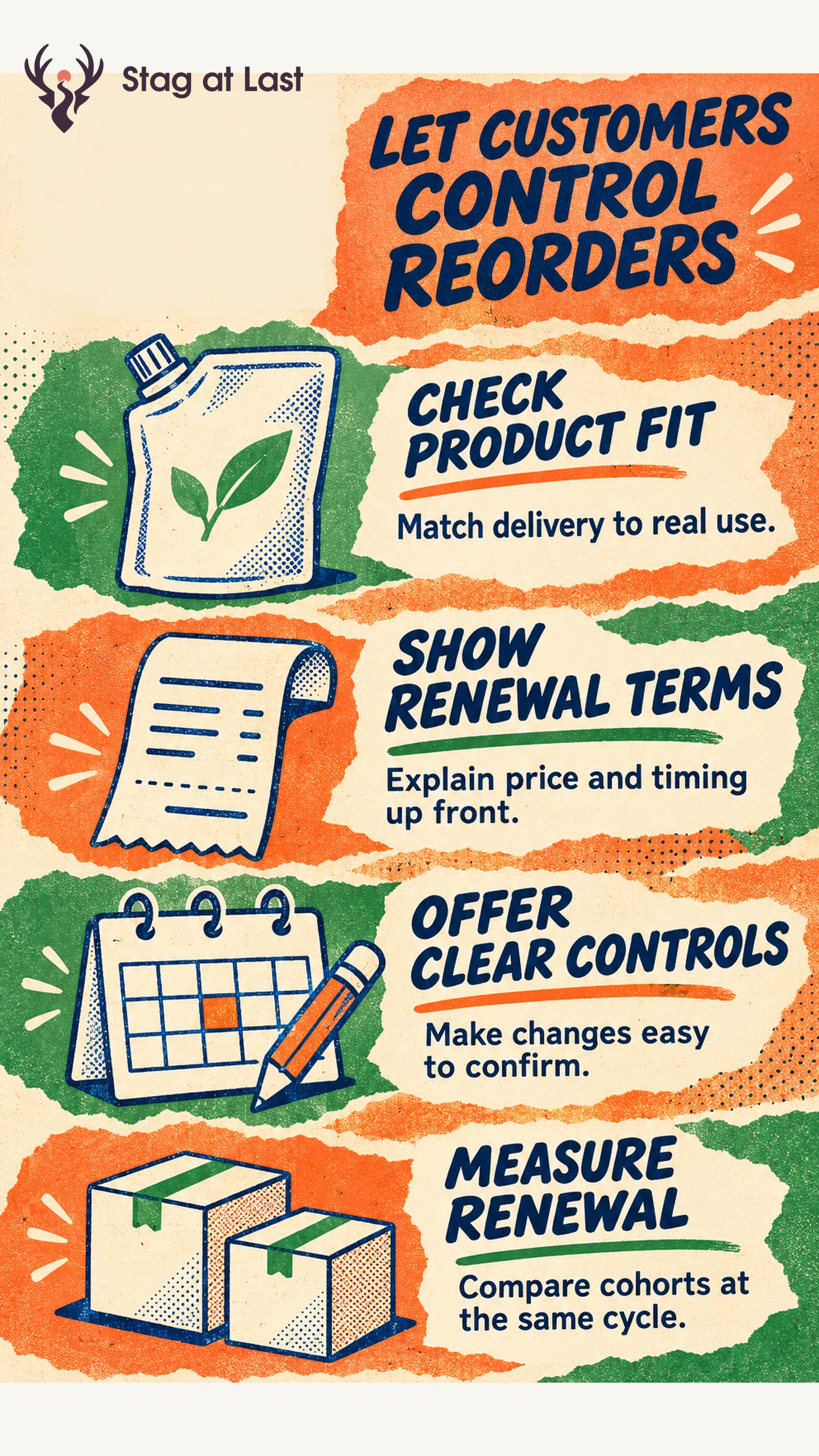
- Check how often customers actually reorder and which products they replenish.
- Show the amount due, renewal frequency and how to make changes.
- Test skip, pause and cancellation where applicable.
- Compare renewal and contribution at the same cycle across cohorts.
Start with one schedule and a one-time option if you still need to learn how frequently people use the product.
A store selling coffee filters might see a clear pattern of repeat orders, but a household using one filter daily needs a different delivery schedule from someone brewing only on weekends. Sending refills too early can create a cabinet full of product. A useful subscription makes the next order easier to manage.
Choose Products With a Repeat Use Case
Review reorder intervals by product, pack size and customer segment. Ask customers how long a pack lasts and what interrupts their routine. If reorder timing varies widely, offer a useful reminder or several supported intervals. If buyers purchase mostly for gifts or one-off events, test a one-time offer or a repeat-purchase benefit before introducing recurring billing.
Choose a starter plan with a specific quantity and cadence. Estimate contribution after recurring discounts, delivery costs, support and refunds. An attractive signup offer matters less if later shipments are unprofitable or arrive before customers need them.
Explain the Recurring Offer Before Checkout
State what ships, what is charged today, the ongoing price and frequency, when the next charge happens, and how to make changes. Make introductory and regular pricing easy to distinguish. Repeat the terms in the cart and confirmation and show which delivery charges apply to each shipment.
For covered U.S. online negative-option transactions, 15 U.S.C. § 8403 requires all material terms to be disclosed clearly and conspicuously in text before obtaining billing information, express informed consent before charging and a simple way to stop recurring charges. [1] Check the rules for each market you serve when defining the checkout and account flow.
Give Customers Control Over the Next Order
Send a useful reminder with the next order date, amount and route to make changes. In Shopify’s own Shopify Subscriptions app, the documented customer experience includes ways to manage subscriptions through customer accounts. [2] Verify which controls your setup actually supports and explain when changes take effect.
Run test cases for changing an address, skipping a shipment and canceling before the next charge. Verify that the customer’s confirmation matches the billing and fulfillment records. If an order is already in progress, explain what is affected now and what changes for future orders. Keep any optional feedback or retention offer separate from the customer’s ability to cancel.
Measure Retention by Renewal Opportunity
Group customers by enrollment date, plan and initial offer. For an illustrative second-payment rate within the original billing window, use the originally scheduled second billing date and a fixed period after that date. Count customers with a successful second payment in that window and divide by first-cycle subscribers whose original second date and processing window have passed. Track skips, pauses, cancellations and payment failures separately. Record rescheduled payments outside the original window in their own category.
Check contribution across the same cohorts after product, fulfillment, discounts and support costs. If skips rise while cancellations stay flat, inspect whether the cadence is too fast. Ask customers what happened using event-based cancellation interviews where appropriate. Use your retention diagnosis to choose a test, such as offering a longer interval, and compare how later cohorts respond.
Check Subscription Terms Across Languages
If your offer runs on multilingual WordPress pages, verify recurring price, frequency and account-control instructions in each language. Include the enrollment and cancellation paths when evaluating a translation workflow.
FAQs About Subscription Ecommerce Marketing
Should I offer a subscription on the first order?
Offer it at first purchase when buyers already understand the product and frequency. For unfamiliar products, a one-time purchase can help customers learn whether the schedule suits them.
Do skips count as churn?
Track skips separately from cancellations. In a renewal-window metric, a skipped payment can reduce the renewal rate while the subscription remains active.
Is a larger subscriber count enough to expand the offer?
Use enrollment alongside renewal, delivery outcomes, contribution and support workload. More signups can conceal problems that appear after the introductory offer.
Sources
[1] Office of the Law Revision Counsel. 15 U.S.C. § 8403, Negative option marketing on the Internet
[2] Shopify. Shopify Subscriptions customer experience