
Quick Answer: What Should Amazon Brand Content Help Shoppers Decide?
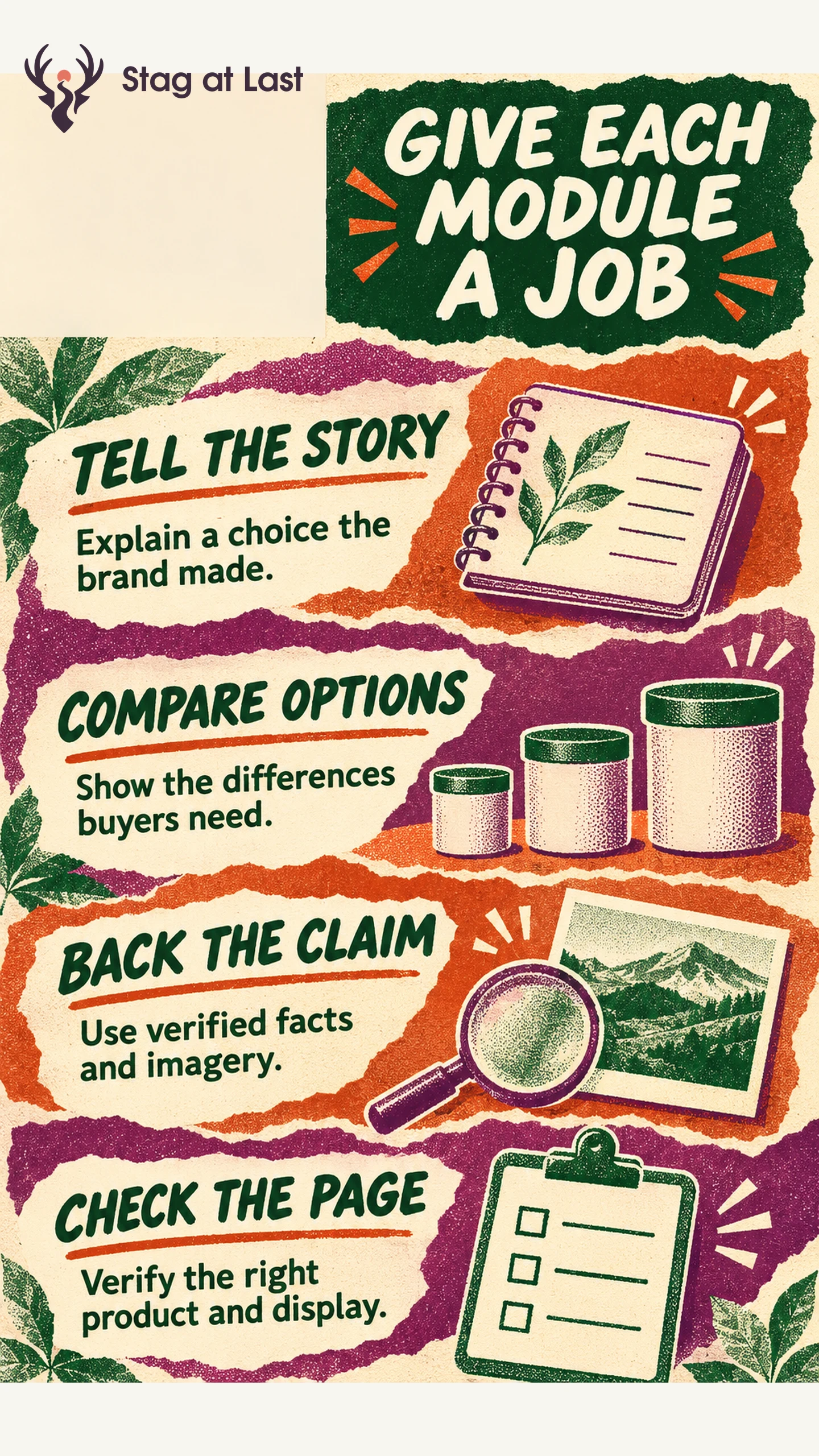
Use Amazon brand content to help shoppers understand why the product was made, compare suitable options and verify details that matter to their use. Give each module one job and check that it answers a question the core listing leaves open.
| Buyer question | Content to use |
|---|---|
| Why did this brand make the product this way? | A concise Brand Story with a relevant design choice |
| Which option in this product family fits my task? | A supported comparison module with verified differences |
| Can I check a feature or use case? | A product image, explanation or allowed demonstration |
Keep essential dimensions, compatibility and contents in the core listing. Check which modules are available for your account and product.
A food storage brand might want to explain its approach to stackable containers. A buyer still needs to know which height fits a shelf, which lid comes with each size and whether the bases can be stacked. The brand story explains the design choice. Product evidence helps the shopper make a selection.
Choose the Content Surface by Its Job
Amazon’s U.S. A+ Content guide describes Basic A+ modules with images, text and product-comparison charts. [1] It describes Premium options that can include video, hotspots and other interactive modules. [1] Brand Story can tell shoppers about the brand across product listings. [1] An Amazon Brand Store is a separate branded shopping destination within Amazon. [3]
Start with a current product detail page audit. Correct the title, attributes and variant details before adding another surface. Use a content module to explain one unresolved question. Consider a Brand Store if shoppers need to navigate a broader range across several product families.
Use Brand Story to Explain a Relevant Choice
Write the story around a decision a customer can see. For the hypothetical container brand, explain why a common footprint mattered and show how supported sizes stack. Keep language specific to the actual design and product range. Confirm that all assigned products fit the story. If older shapes are incompatible, make the boundary visible.
A useful story can fit in three parts. Name the customer problem, explain what the brand changed and show the evidence. Avoid claims about longevity, quality or awards that the assets cannot support. Use buyer questions and research to decide what the story should clarify.
Compare Products With Verified Evidence
Use the same measurement and label across options. Compare facts that change the decision, such as capacity, exterior height with the lid, included parts or a verified compatible accessory. A shopper should be able to see why one option suits a shallow shelf and another holds a larger quantity. Avoid presenting a different variant as the one the customer selected.
Amazon’s A+ design guidance prohibits references to or comparisons with competitor products and excludes pricing, promotional and shipping details. [2] Use comparisons among your own eligible products, and verify each displayed value against the source record. If you need to explain what ships as a kit, use your verified component list rather than reusing a lifestyle image that adds unlisted props.
Check Eligibility, Claims and Published Display
Amazon’s U.S. A+ guide lists a Professional selling account as a requirement. [1] For branded products it also requires an assigned Brand Representative or Reseller role for a brand enrolled in Brand Registry. [1] The guide also lists a separate eligibility route for sellers with generic products in their catalog. [1] Confirm module access for the specific product and marketplace before designing around it.
Write a short brief naming the question, evidence owner, intended ASINs and acceptance check. After publication, inspect the actual page on a phone. Check readability, image crop, the selected variant and whether each linked item is the one you meant to compare. Record unresolved buyer questions and relevant return reasons over a defined period. Changes in price, traffic and inventory can also affect those outcomes.
Keep Brand and Product Facts Consistent Across Languages
If you also run a multilingual WordPress site, check that your product comparisons, dimensions and included items match the same source record. Include a technical content check when evaluating a translation workflow.
FAQs About Amazon Brand Content
Is Brand Story the same as an Amazon Brand Store?
Brand Story is a product detail page content type. The Brand Store is a separate branded destination where shoppers can browse the range.
Should I put all product specifications in A+ Content?
Keep essential specs in the core listing so buyers can see them while choosing a variant. Use expanded content for useful context or a readable comparison.
Can I compare my product with a competitor in A+ Content?
Amazon’s A+ design guidance prohibits references to or comparisons with competitor products. Compare verified differences among your own eligible products and check current guidance before submitting. [2]
Sources
[1] Amazon. A+ Content
[2] Amazon. Amazon A+ Content Design Guide with Examples and Tips
[3] Amazon Ads. Brand Stores