
Quick Answer: How can you use price anchors to clarify buyer choices without misleading people?
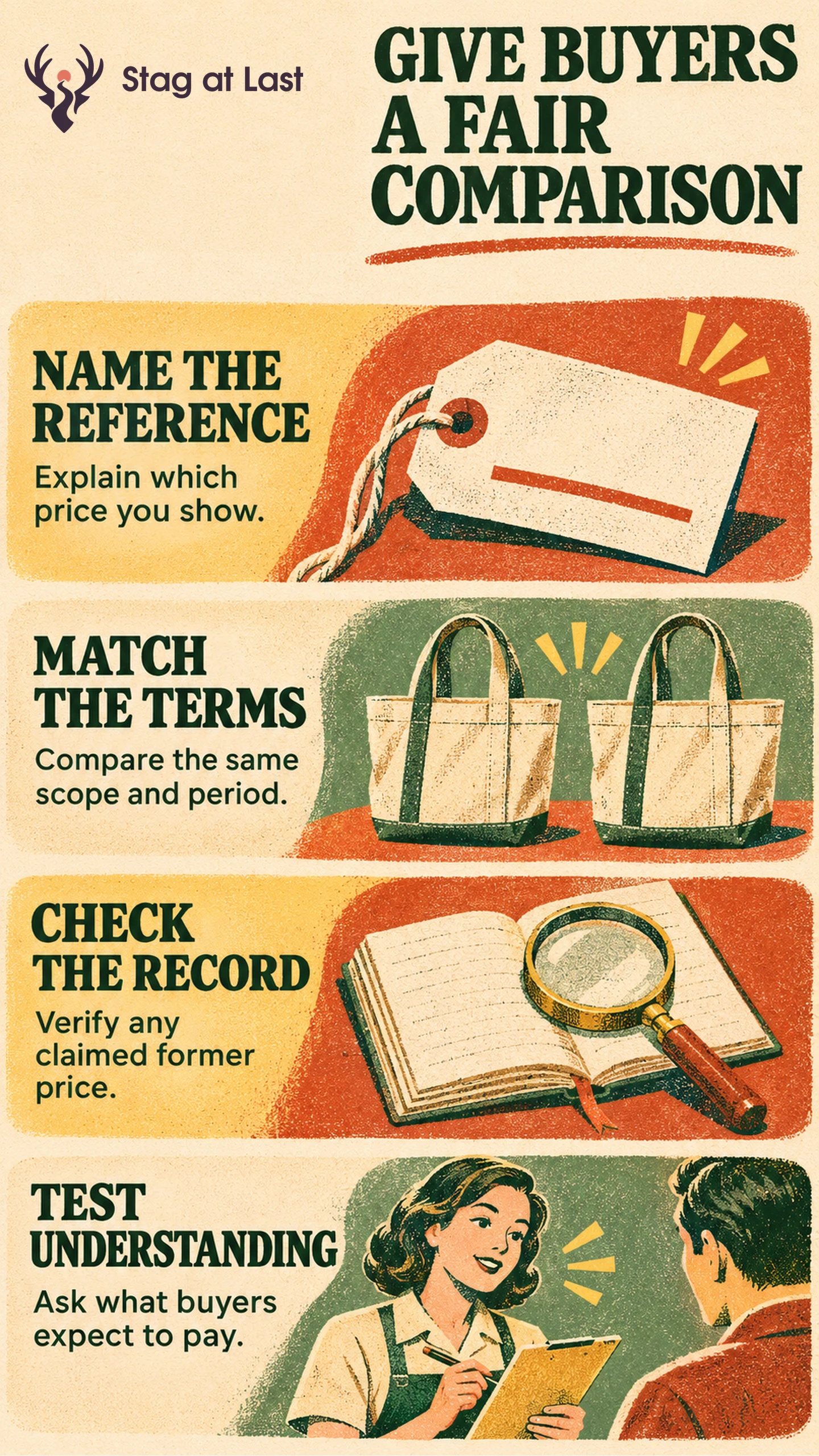
A price anchor is a reference figure a buyer uses to evaluate another price. Use a reference that has a clear meaning and a basis you can verify. Show what the buyer will pay, for which scope and over which period.
- Label the reference as a current tier, former price or other specific comparison.
- Align the quantities, billing periods and conditions.
- Verify any claimed saving and check buyer understanding.
A current higher tier can clarify a choice. A former price needs evidence that supports the exact claim.
A store shows a jacket at $70 beside a crossed-out $100. A subscription page shows two plans at $70 and $100. The same numbers describe different offers. One may imply a reduction from a former price. The other asks the buyer to choose between current products.
Name the Price You Are Using as a Reference
Earlier numbers can influence later numerical judgments, as research on anchoring and adjustment describes. [1] On a pricing page, use that reference to orient the buyer. Label whether it is a former asking price, another plan or a different quantity of the same product. Do not imply a saving from a prior price when the comparison is only between two options sold today.
Compare the Terms the Buyer Will Actually Get
Put the relevant differences beside the price, including features, quantity, renewal schedule and what is due now. In an illustrative software example, a monthly plan costs US$40 per month. An annual plan with the same features costs US$360 billed upfront. If the buyer keeps the monthly plan for 12 months at that rate, they would pay US$480 before applicable taxes. The annual option costs US$120 less over that assumed period and requires a larger initial payment. If you show the annual plan as equivalent to US$30 per month, display the US$360 upfront charge next to it.
Keep the same basis across the page and checkout. If the lower figure assumes a narrower scope, fewer seats or a qualifying commitment, explain it where the buyer sees that figure. Claims about a deadline need their own evidence, as the guide to scarcity and urgency explains.
Keep Evidence for Former-Price Claims
For US comparisons with an advertiser’s own former price, the FTC’s pricing guide describes a legitimate former price as a genuine price at which the item was regularly offered publicly for a reasonably substantial time. The guide distinguishes a price at which something was offered from a claim that it previously sold for that amount. [2] Keep a dated record of the product, price, market, public offer dates and terms. If copy says or implies that the item previously sold at that price, the guide calls for substantial actual sales at that price. Retain records that substantiate the claim. Review applicable rules in the markets where the offer appears.
Test What Buyers Understand and What They Do
Ask shoppers which plan they selected, what will be charged today and when the next charge will occur. Ask buyers to explain the commitment and the assumption behind any claimed savings. Then track paid conversion, contribution after variable costs, and cancellations or complaints about the offer. Keep the same time horizon across comparisons. If people choose a plan but misunderstand the price they will pay, fix the comparison before treating the higher selection rate as a success.
Check That Pricing Terms Survive Translation
If you translate a WordPress pricing page, evaluate StagLingo on a few sample pages. Verify currencies, billing periods and promotional conditions in each language before publishing.
FAQs About Price Anchoring FAQs
Is showing a more expensive plan a former-price claim?
No. A genuine current tier comparison describes options available now. Label each tier and explain differences in scope and billing.
Can a former asking price be shown when no sales occurred?
The US FTC guide says a lack of sales does not automatically make an asking price fictitious. Verify the genuine public offer and avoid implying prior sales you cannot substantiate.
How do you measure whether a comparison helps?
Check whether buyers can explain the total charge and conditions. Then measure purchase outcomes and later complaints or cancellations.
Sources
[1] Tversky and Kahneman. Judgment under Uncertainty: Heuristics and Biases
[2] Federal Trade Commission / eCFR. 16 CFR § 233.1: Former Price Comparisons