
Quick Answer: How Do You Match Buyers With Customer References?
Match a buyer with a customer who has firsthand experience of the decision in front of them. Confirm the reference’s interest and availability, describe the context of the match and record what the conversation answered.
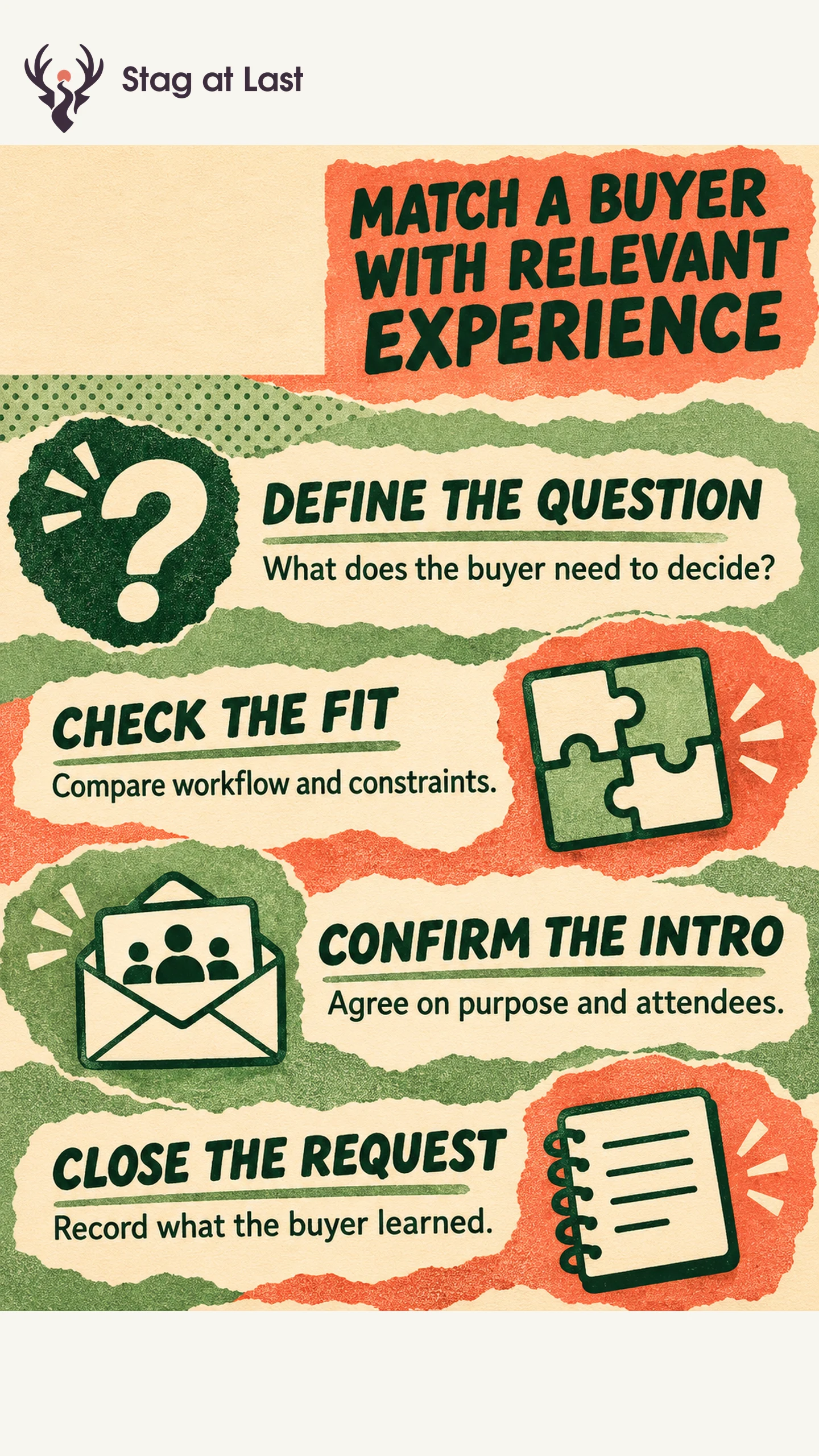
- Capture the question. Identify what the buyer still needs to know after reading existing evidence.
- Match relevant experience. Check workflow, role, implementation and constraints before industry or logo.
- Agree to the introduction. Confirm the purpose, attendees, time and any confidentiality limits with both sides.
- Close the request. Record usefulness, unanswered questions and the reference’s next availability.
If the match is only partial, explain which part of the buyer’s question the reference can address.
A buyer asks to speak with a customer in their industry. The useful match depends on what they want to learn. Someone who managed the same integration may answer the question better than a familiar brand that used the product in a different way.
Turn the Request Into One Buyer Question
Ask what the buyer needs to decide and which information is missing. Capture the expected attendees, role, workflow, constraints and decision date. A question about implementation effort needs a person who led or observed it. A question about everyday use needs someone who does that work.
Gainsight describes using a cross-functional process to request and track customer references. [1] Give your program one place to accept requests, check fit and record outcomes. Before asking for a call, see whether an approved case study, implementation guide or answer from your own team covers the question.
Match the Experience to the Decision
Separate essential match criteria from helpful context. For a hypothetical purchasing platform, a buyer wants to know how approvals worked for users without company email addresses. A customer in a different industry who solved that problem may be a stronger match than a direct industry peer who used company email for every approver. State the industry difference so the buyer can interpret the experience.
| Match quality | What to offer | What to say |
|---|---|---|
| Relevant experience and available contact | A scoped introduction after approval | Explain the shared workflow and the intended question. |
| Partial match | A caveated conversation or approved artifact | State which question it addresses and what differs. |
| No relevant available match | An approved alternative or time to find one | Explain what is known and which evidence is missing. |
Check whether the experience is still relevant to the buyer’s plan, version and environment. If an account has experienced significant changes since the rollout, update its profile before treating it as a current match.
Confirm Interest and Protect the Reference’s Time
Invite the reference privately and explain the purpose, audience and expected time. Ask for approval before sharing contact details. Agree whether the call will be recorded or quoted. Keep the conversation voluntary and apply the separate publication approval process if any material is intended for wider use.
Give both sides the topics in advance. Let the customer describe their own experience, including what took effort or went wrong. Use a shared request history and one owner to prevent duplicate asks. Check the customer’s preferred frequency and recent activity. If an unresolved account issue makes the timing poor, coordinate through the account’s customer success owner.
Record What the Buyer Learned
After the conversation, ask which question was resolved and whether the buyer needs other evidence. Record the match criteria, timing, completion and any outstanding question. Thank the customer and update the availability record. Avoid storing unnecessary details of private conversations.
Monitor fulfilled requests, wait times, declines and repeated asks by segment. Use missing matches to decide where to recruit participants or develop approved materials. If you report that opportunities used a reference, state the inclusion rule. That report shows the use of references in deals, while estimating sales impact would require a suitable comparison.
Check Reference Materials Across Site Languages
If approved case studies are shared from a multilingual WordPress site, evaluate StagLingo on a representative story. Confirm that the customer approved the intended use and that important context stays clear in each language.
FAQs About Customer Reference Programs
When is a case study enough?
A case study is enough when it answers the buyer’s question with relevant context and current approved information. Offer a conversation when firsthand detail or follow-up questions would change the decision.
What if the best reference is unavailable?
Explain the gap and offer a partial match with the difference stated, or use an approved artifact. Avoid treating an unrelated name as equivalent evidence.
Should a reference get the buyer’s contact details?
Share only the details needed for the agreed introduction and check that both sides expect the exchange. An invitation coordinated by the program owner can avoid handing out contact details in advance.
Sources
[1] Gainsight. The Guide to Customer Marketing