
Quick Answer: How Do You Build a Responsible Customer Advocacy Program?
Build a customer advocacy program around voluntary activities with a clear purpose. Let customers choose what to contribute and obtain approval for the specific material, attribution and places you intend to use it.
- Offer relevant activities. Match the request to the customer’s experience, interest and time.
- Confirm permitted use. Separate program interest, participation and publication approval.
- Handle incentives carefully. Keep compensation independent of review sentiment and check disclosure and platform rules.
- Manage requests. Record active permissions, ask frequency and how to decline future contact.
Ask for a new approval when the material or its planned use changes beyond the existing scope.
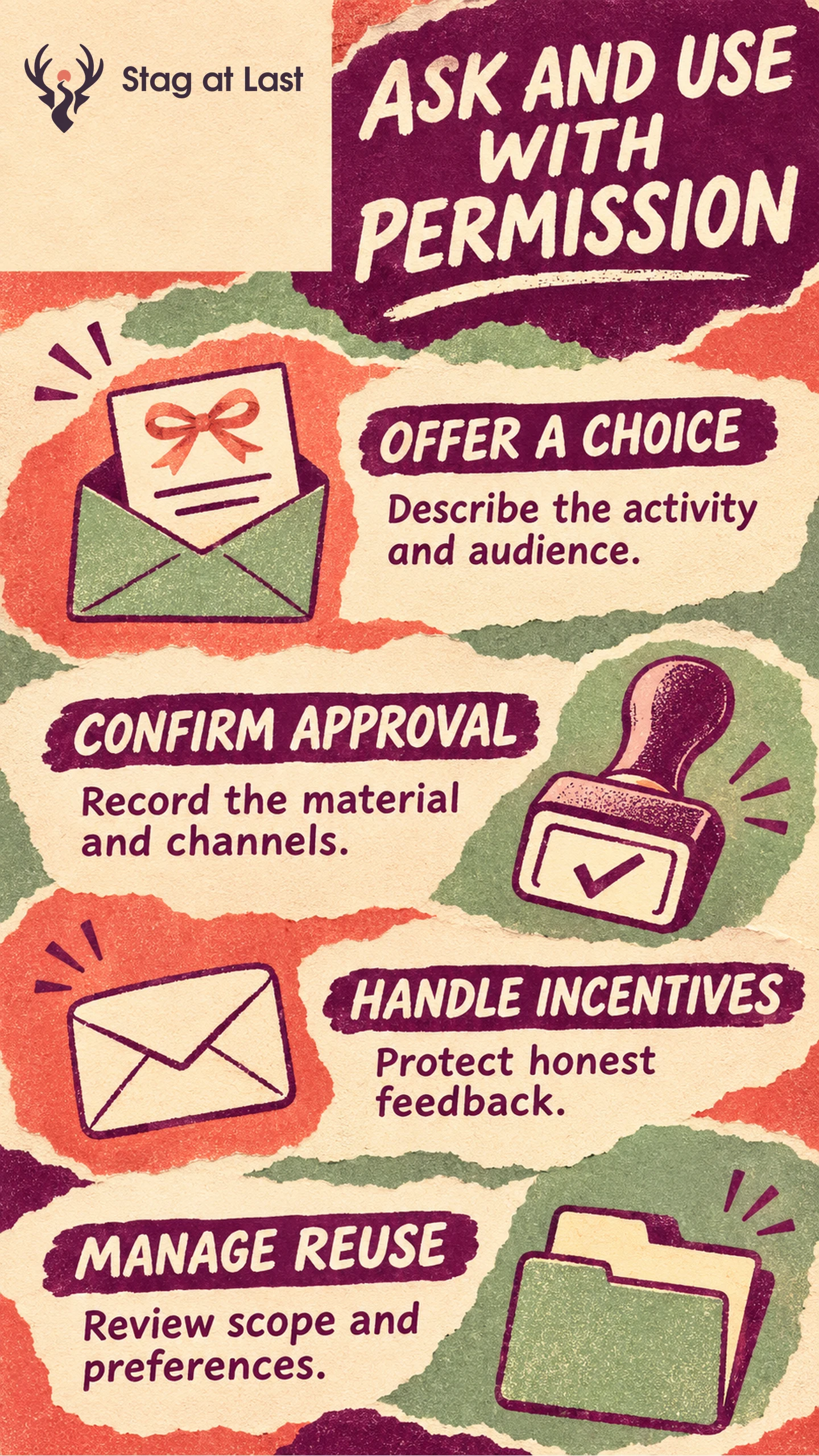
A customer may agree to answer questions in a private community and decline to appear on a public campaign page. Both choices can be useful. Design the advocacy program so each invitation describes a specific activity and each publication has a record of what the customer approved.
Offer Activities With a Clear Purpose
Choose activities that serve an audience. A peer session can help customers share practical setup ideas. A case study can show how a team approached a problem. A reference conversation can help a buyer assess a similar rollout. Ask for relevant experience and offer a way to decline without losing ordinary support.
Give customers enough information to decide. Describe the audience, time, whether the session is recorded and what you want to use afterward. An opt-in to receive invitations can help the team find willing participants. Ask again for the particular activity when it comes up. Treat survey responses as feedback and keep the invitation and approval separate.
Ask Separately for Participation and Publication
In a hypothetical program, a customer agrees to join a private implementation workshop. Later, the marketer wants to quote a sentence from that discussion on a public landing page. Ask for approval of the exact quote, attribution and destination. If a customer offers anonymized detail, review whether the role, industry or project clues could still identify the organization.
| Decision | What to record |
|---|---|
| Contact | Activities the customer wants to hear about and how they can opt out. |
| Participation | Scope, date, audience and whether recording is agreed. |
| Publication | Approved text or asset version, attribution, allowed channels, term and approver. |
| Reuse | Whether a new edit, language or paid placement fits the approved scope. |
Check whether the speaker can approve their own attribution and whether a company name, logo or business result needs a different approver. Keep the customer’s underlying claim and context intact when editing.
Handle Incentives and Endorsements Carefully
If you reimburse time or travel, explain the terms up front and keep the reward independent of praise. The U.S. FTC’s consumer review rule prohibits incentives expressly or implicitly conditioned on consumer reviews expressing a particular sentiment. [1] Check the destination’s rules before offering any review incentive. Some review platforms impose their own conditions. An incentive can still need disclosure even when it is offered regardless of sentiment.
Under the U.S. FTC’s Endorsement Guides, clearly disclose a connection that could affect the endorsement’s credibility when the audience would not reasonably expect it. [2] Review any material relationship, such as payment for a public appearance, and make a required disclosure visible where the audience encounters the endorsement. Verify outcome claims and keep the limits of a specific customer’s experience visible.
Manage Request Load and Approved Use
Keep one request history across marketing, sales and success. Record who asked, the customer’s response, the last activity and any cooldown or preference. Give one owner authority to pause new invitations during an unresolved issue or when the person asks for a break. Use the customer marketing and success handoff to route account context without sharing more information than necessary.
Track accepted and completed activities by type, repeat participation, declines and outstanding approvals. Keep an owner for each published asset and a date to review whether its permissions and claims still apply. If a customer withdraws, stop new use as appropriate, review existing placements against the agreement and explain what the team can update or remove.
Check Advocacy Invitations Across Site Languages
If advocacy invitations or stories live on a multilingual WordPress site, evaluate StagLingo on a representative page. Check that the use, attribution and disclosure language remain clear before publishing a localized story.
FAQs About Customer Advocacy Programs
Does a positive survey response give publication permission?
No. A survey response is evidence of feedback. Ask for specific approval before quoting or identifying the customer in public material.
Can a customer contribute without being named?
Yes, where the activity and terms allow it. Agree how the contribution will be described and check whether the remaining details could reveal the customer.
What should you track besides participation?
Track outstanding permissions, request frequency, withdrawals and whether the contribution served its stated purpose. These signals help the team avoid overusing the same people.
Sources
[1] U.S. Federal Trade Commission. Consumer Reviews and Testimonials Rule: Questions and Answers
[2] Electronic Code of Federal Regulations. 16 CFR 255.5: Disclosure of Material Connections