
Quick Answer: What should customers know about returns before buying?
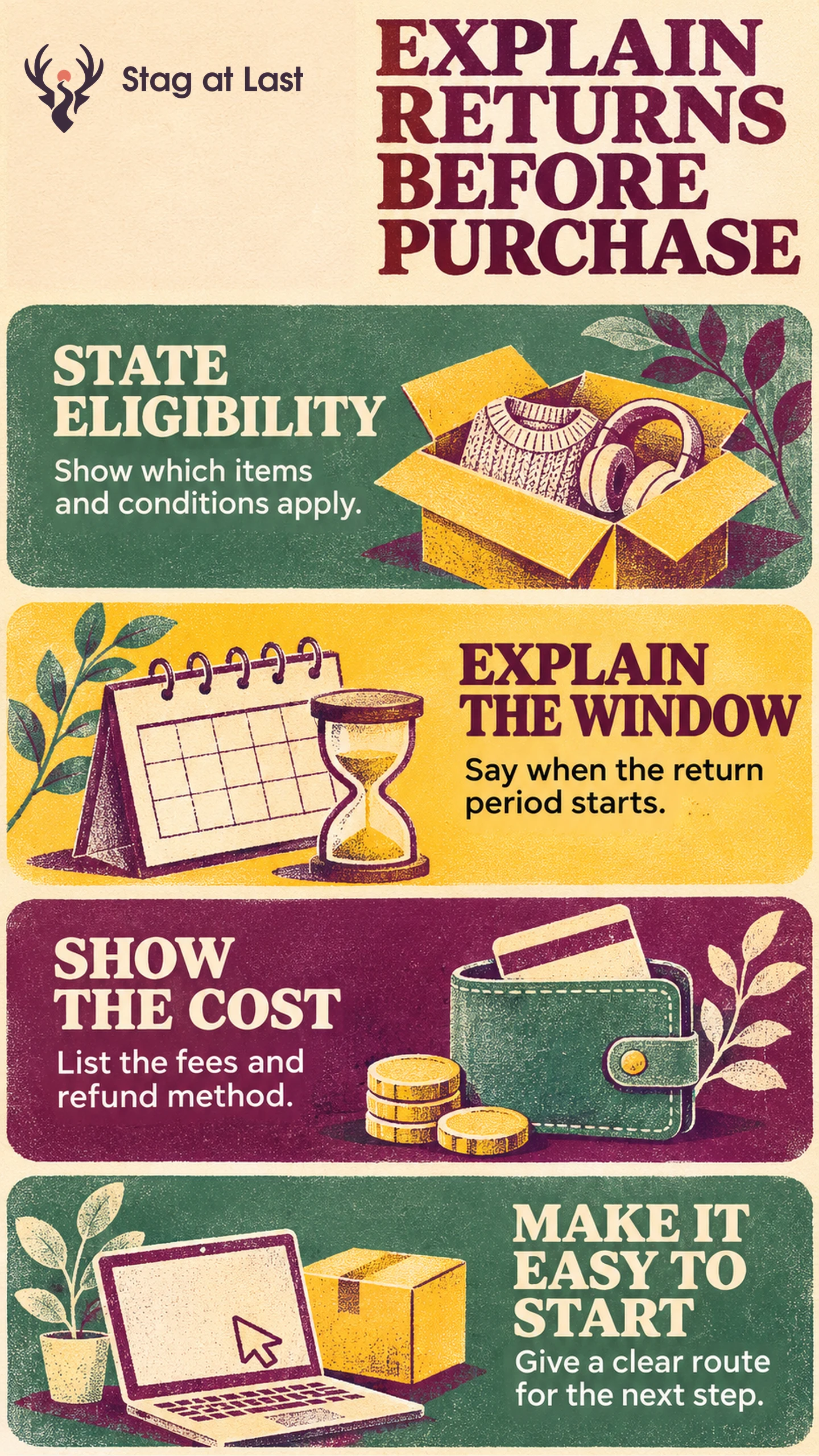
Show shoppers whether the item can be returned, when the return window starts, what the process costs and how they begin. Put conditions that could change the purchase beside the relevant item or buying action.
- Explain eligibility, exceptions and deadlines in plain language.
- State who pays for shipping and how a refund is issued.
- Give a clear route for standard returns and a separate route for defects or errors.
- Check that store pages, return tools and support apply the same terms.
Make the full policy easy to find before and after the order.
A shopper considering a bulky chair may want to know whether they can return it if it does not fit and how much collection would cost. A link titled “Easy returns” leaves those questions open. Help shoppers understand the practical conditions before they choose.
Show the Decision Before Purchase
On the product page, summarize the terms that apply to the item. State whether it is eligible, name any special condition and link to the full policy. Baymard’s product-page research describes shoppers looking for return details when evaluating purchases. [1] Use the visible summary to answer key questions before the buyer opens a separate page.
Explain differences by market, item or delivery method as appropriate. Keep policies for voluntary returns aligned with applicable consumer requirements, and give a clear way to report damage or a wrong item. Avoid using a store policy label to imply it removes other applicable protections.
Explain How the Window and Fees Work
State whether the return deadline is for starting a request, sending an item or the store receiving it. Name the event that starts the clock. Shopify’s return-rule settings, for example, can start the window at each item’s delivery or at delivery of the last item in an order. [2] For the per-item setting, Shopify uses the fulfilment date plus a transit buffer if the delivery date is unavailable. Match the site’s wording to the selected rule.
For an illustrative store, two items arrive on different dates and the voluntary change-of-mind policy allows return requests within 30 days of each item’s delivery. The store should display the deadlines separately. If both share a deadline from the final delivery, say so. Explain return shipping fees, original delivery amounts, refund method and when processing begins.
Make the Return Route Easy to Start
Link to the return action from order records, receipts or the support route. Tell customers what they need before starting. Provide a path for guest purchases and exceptions that a self-service portal cannot handle. Use clear status messages for request received, return accepted, item received and refund initiated.
If items can be returned in store, state which locations accept them and what the customer should bring. Test that staff have the necessary order context. Follow the cross-channel returns checks when store and website records need to be connected.
Check Consistency and Customer Outcomes
Compare policy text, cart notices, checkout, post-purchase information and support instructions using the same item and order. Merchant Center’s return-policy setup includes markets, return windows and return methods for Shopping ads and free listings. [3] If you use those channels, verify their policy settings against what your shoppers actually receive.
Have someone check eligibility and start an eligible return without coaching. Test a split delivery, an exception and a wrong item. Monitor support contacts about deadlines and fees and count the share of eligible requests that reach the promised outcome within a fixed window, such as a refund issued or a replacement dispatched. Include only requests with a full observation window and track refund settlement separately when available. A clear policy can also help people identify products whose terms do not suit them.
Review Returns Information Across Languages
If your WordPress store serves more than one language, evaluate StagLingo on a set of product and returns pages. Verify that eligibility, deadlines, fees and start-return links match the terms for each market.
FAQs About Return Policy UX
Should a return policy appear on product pages?
State key terms near the relevant product choice when they could affect the purchase. Link to the full policy for examples, definitions and less common cases.
How do you explain returns for split deliveries?
Say whether the window starts separately for each item or after the final delivery. Show the relevant deadline in the order where possible.
What if a customer has a damaged or incorrect item?
Provide a separate reporting route and explain the next step. Avoid treating a damaged or incorrect item like a regular change-of-mind return.
Sources
[1] Baymard Institute. Product Page UX Best Practices
[2] Shopify Help Center. Setting up return and cancellation rules
[3] Google Merchant Center Help. Set up your return policies for Shopping ads and free listings