
Quick Answer: When Does Per-Seat Pricing Make Sense?
Per-seat pricing fits when identifiable users receive recurring value and buyers can forecast how many people need access. Define what counts as a seat and test whether the charge discourages important collaborators from joining.
| Seat model | Fits when | Verify |
|---|---|---|
| Named seats | Teams reserve access for identifiable people. | What makes a user billable, including inactive users. |
| Active seats | Use varies and activity can be measured fairly. | Which event and period count as active. |
| Role-based seats | Editors and occasional reviewers need different access. | Permissions, charges and role changes. |
Compare the same buyer workflow and team under each rule before choosing.
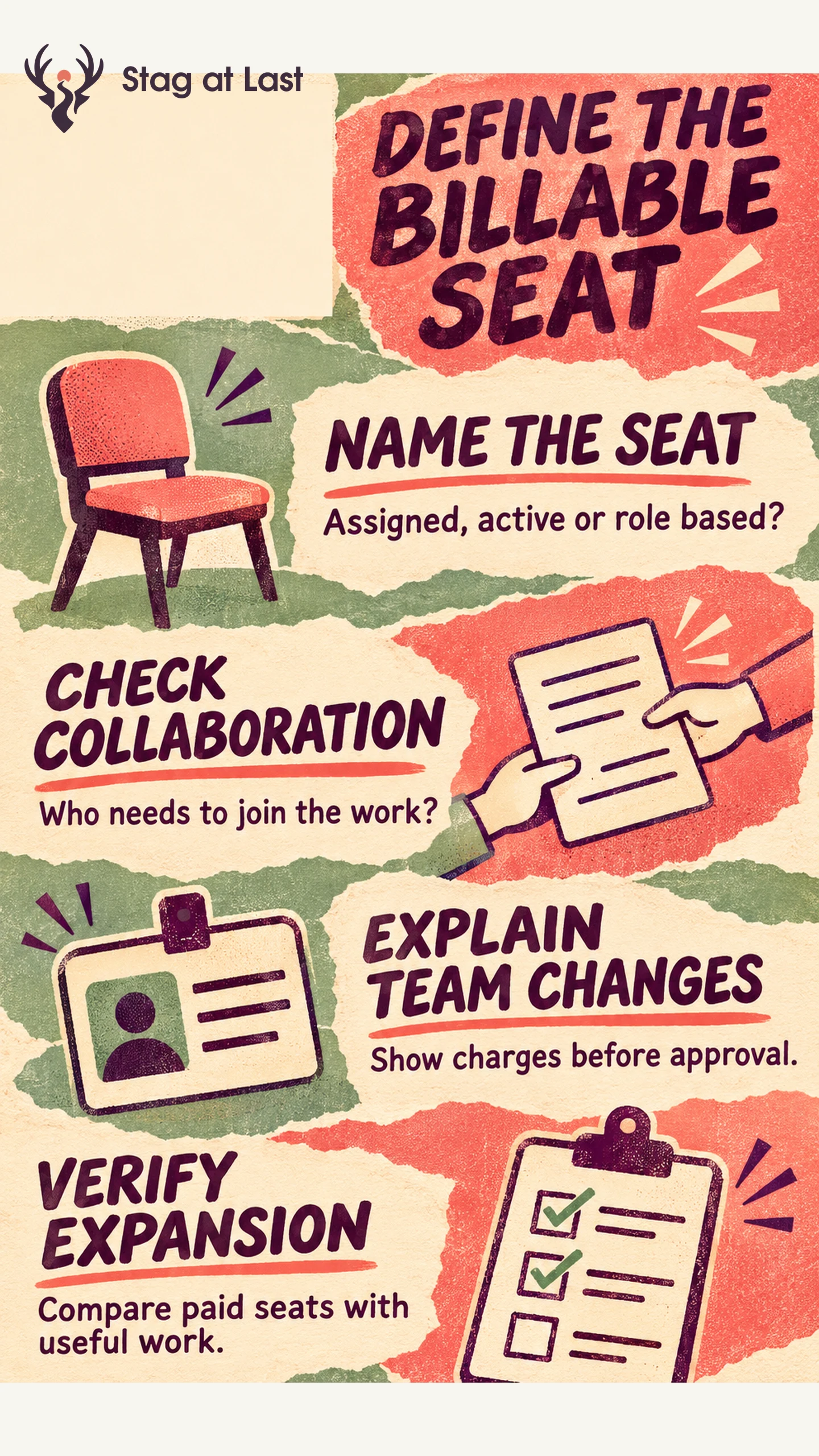
A buyer may understand a price per user and still be unsure what their first invoice will include. A pending invite, a guest and an occasional approver can be counted differently. The design question is which people need access for the product to work and what happens when they join.
Define Who Counts as a Seat
Name the condition that creates a charge. A purchased seat can be capacity a customer reserves even when unassigned. A named seat can be assigned to a specific person. An active-seat plan charges based on a defined behavior in a window. A role-based plan can charge differently for editors and viewers.
Slack’s Fair Billing Policy describes active-member billing for plans bought through its website and paid by card or self-serve invoice, with a minimum charge for one member when everyone is inactive unless the workspace downgrades to free. [1] The scope and exception matter. If you use an active rule, specify the event, period and minimum in your own terms.
Check How the Charge Changes Collaboration
A seat can map well to value when each user completes a meaningful recurring task. It can create friction when many occasional participants are needed for one person’s work. Identify who creates, reviews, approves or consumes the output. Check what the workflow loses when one of those roles stays outside the tool.
For a hypothetical proofing product, six editors prepare files and 14 occasional reviewers approve them. At US$12 per billable person per month, charging all 20 would cost US$240. Charging only the six editors would cost US$72 under a plan that includes restricted review access. Both examples exclude tax and discounts. The second offer costs less for the same team, and the vendor needs to check whether the difference is sustainable and whether the reviewer role covers the real task.
Watch for users forwarding files or sharing credentials because inviting a reviewer changes the bill. Consider a role with limited access or a workspace allowance that fits the workflow. Check the security and permissions of each option. If a few people generate most of the workload, compare usage-based pricing using the same buyer scenario.
Make the Bill Predictable Through Team Changes
Say what happens when a seat is invited, assigned, removed or reactivated. Describe who can add a billable seat and what the administrator sees before confirming. Explain any proration, minimum, unused capacity or credit, including when a reduction takes effect.
Put the count rule alongside the price. Keep the current billable roster available to an authorized buyer. Provide a bill example for a mid-period change based on your actual terms. If the package includes special roles, verify that the plan comparison and in-product permission names describe the same capabilities.
Test Expansion With Evidence of Use
Check that collaborators can join the correct role and complete a representative task. Track purchased seats, assigned seats and people who complete relevant work as separate measures. A rising invoice can reflect additional committed seats even while collaboration stays flat.
Pilot the rule with buyers who have both regular and occasional participants. Ask them to forecast a month with a new hire and a temporary reviewer, then test those actions and compare the resulting invoice. Review successful collaboration, blocked invitations and billing questions alongside expansion revenue. Revisit the rule if buyers avoid an essential role or if the plan cannot cover the cost of the access it offers.
Check Seat Rules Across Site Languages
If a multilingual WordPress site explains your plans, evaluate StagLingo on the pricing and role pages. Check that each language distinguishes editors, viewers and the people who add charges.
FAQs About Per-Seat Pricing
Is a guest always free?
No. Guest pricing depends on the permissions, allowance and terms of the plan. Explain which guest actions are included and which trigger a paid role.
When does an added seat affect the bill?
That depends on the terms. Some offers prorate a mid-period addition, while others apply the change at renewal or use a committed quantity. Confirm the timing before adding access.
When should you compare seats with usage pricing?
Compare them when headcount and actual work volume tell different stories. Use the same account scenario and check predictable cost, workflow coverage and the provider’s serving cost.
Sources
[1] Slack Help Center. Slack’s Fair Billing Policy